This post contains affiliate links. I may earn a small commission at no extra cost to you. Thank you for supporting Snowflakes & City Lights Travel.
On day five of our Hong Kong trip in October 2025, during the Mid-Autumn Festival period, we checked out of our Kowloon hotel, stuffed everything back into three carry-on cases and two backpacks, and headed for the ferry terminal. Next stop: Macau. Two nights in a completely different city, less than an hour across the water.
This was part of a bigger multi-city trip—if you’re planning something similar, you can see our full route in this Hong Kong, Macau and Hanoi 12-day itinerary.
Getting from Hong Kong to Macau feels straightforward until you start Googling it. Decision fatigue quickly sets in. Ferry or bus? Which ferry company? Which terminal? What do you do with your luggage if you’re checking out of your hotel that morning?
We had the same questions, and figuring out the answers while mid-trip with our 9-year-old and luggage, taught us a few good tips and tricks.
Short version: for most first-time visitors, the TurboJET ferry from Sheung Wan to Macau’s Outer Harbour is the easiest option. It’s what we took, and what we’d do again, though I would love to cross the bridge one day! Check ferry times and book tickets here before you go.
So, if you’re visiting Hong Kong for the first time and planning a quick trip to Macau, (especially if you have luggage or kids with you), this is everything we learned about travelling between Hong Kong and Macau: the ferry we took, the alternatives we researched but didn’t use, and the practical details I wish I’d known before we boarded. Including a seat allocation system (and how to avoid getting stuck with a bad seat!) and a luggage storage option that saved us a decent chunk of money.
Choosing the right area to stay can make this day much easier. We break that down in where to stay in Hong Kong for first-time visitors.
Post Navigation
Taking the TurboJET Ferry
TurboJET or Cotai Water Jet — Which Ferry Should You Take?
How to Book and What it Costs
Getting to the Ferry Terminal in Hong Kong
Getting to the Ferry Terminal in Macau (and what caught us out)
Ferry seat allocation
What the crossing is really like
Hong Kong and Macau Immigration: What to Expect
Taking the Bridge Bus: Hong Kong to Macau via the HZMB
Direct coach option
Why we skipped the bus
Private Transfer
Quick Tips for the Hong Kong to Macau Ferry
Which Option Is Right for You?
How to Get from Hong Kong to Macau: Ferry, Bus or Transfer
Quick Answer: Ferry vs Bus vs Transfer
- Ferry – easiest and most straightforward (best for most travellers)
- Bridge bus – cheapest, but more complicated logistics
- Private transfer – most convenient, but expensive
There are three ways to get between Hong Kong and Macau: ferry, bus over the Hong Kong–Zhuhai–Macau Bridge, or a private cross-border transfer. They all take roughly an hour of travel time, but the door-to-door experience is very different depending on which you pick.
If you want the simplest option: take the ferry. Terminals are centrally located, departures are frequent, and you don’t need to navigate any complicated transfers. This is what most first-time visitors do, and it’s what we did.
If you’re leaning towards the ferry, you can check availability here → Book ferry tickets
Where you stay in Hong Kong actually makes a big difference here, especially for ferry access. I’ve broken that down in more detail in our where to stay in Hong Kong for first-time visitors guide.
If budget is the priority: the bridge bus (Golden Bus shuttle) is significantly cheaper at around HK$65 per person. But the ports are on the outskirts of both cities, so you’ll need to factor in extra time and transport at both ends.
If you want door-to-door convenience: a private cross-border transfer picks you up at your hotel and drops you at your destination. It’s the most expensive option by a wide margin, but there’s no navigating terminals or immigration queues on your own.
TurboJET also runs a helicopter service between the two cities if you’re feeling extravagant. We were not.
Taking the TurboJET Ferry from Hong Kong to Macau
By the time we were heading to Macau, we’d been in Hong Kong for five days in 30-degree heat and near-constant humidity. We weren’t too interested in spending half of our last morning navigating a complicated transfer. We weren’t looking for the cheapest option either. Just the one that would use the least amount of travel time and leave most of our day free. A tricky feat on a travel day!
We liked that the ferry terminal was on Hong Kong Island. We’d spent most of our trip on the Kowloon side (which worked really well for us location-wise – I’ve broken that down in more detail in my guide on where to stay in Hong Kong for first-time visitors), so heading to Sheung Wan gave us one last opportunity to wander through a different part of the city before we left.
(We had a similar “is this worth the effort?” debate earlier in the trip when deciding whether to walk up Victoria Peak — very different experience, but the same kind of decision-making moment. You can read that here: how to get to Victoria Peak: we walked it, should you? )
We were travelling with our son, who was nine at the time. He’d handled five days of walking and crowds well, but anything that added transfers or uncertainty wasn’t going to work that morning.
Ultimately, simplicity was the winner. The ferry route was really easy, involving a quick train to the terminal, the ferry crossing to Macau, and a short bus ride directly to our hotel.
TurboJET or Cotai Water Jet — Which Ferry Should You Take?
There are two ferry operators on this route, and which one you want depends on where you’re headed in Macau.
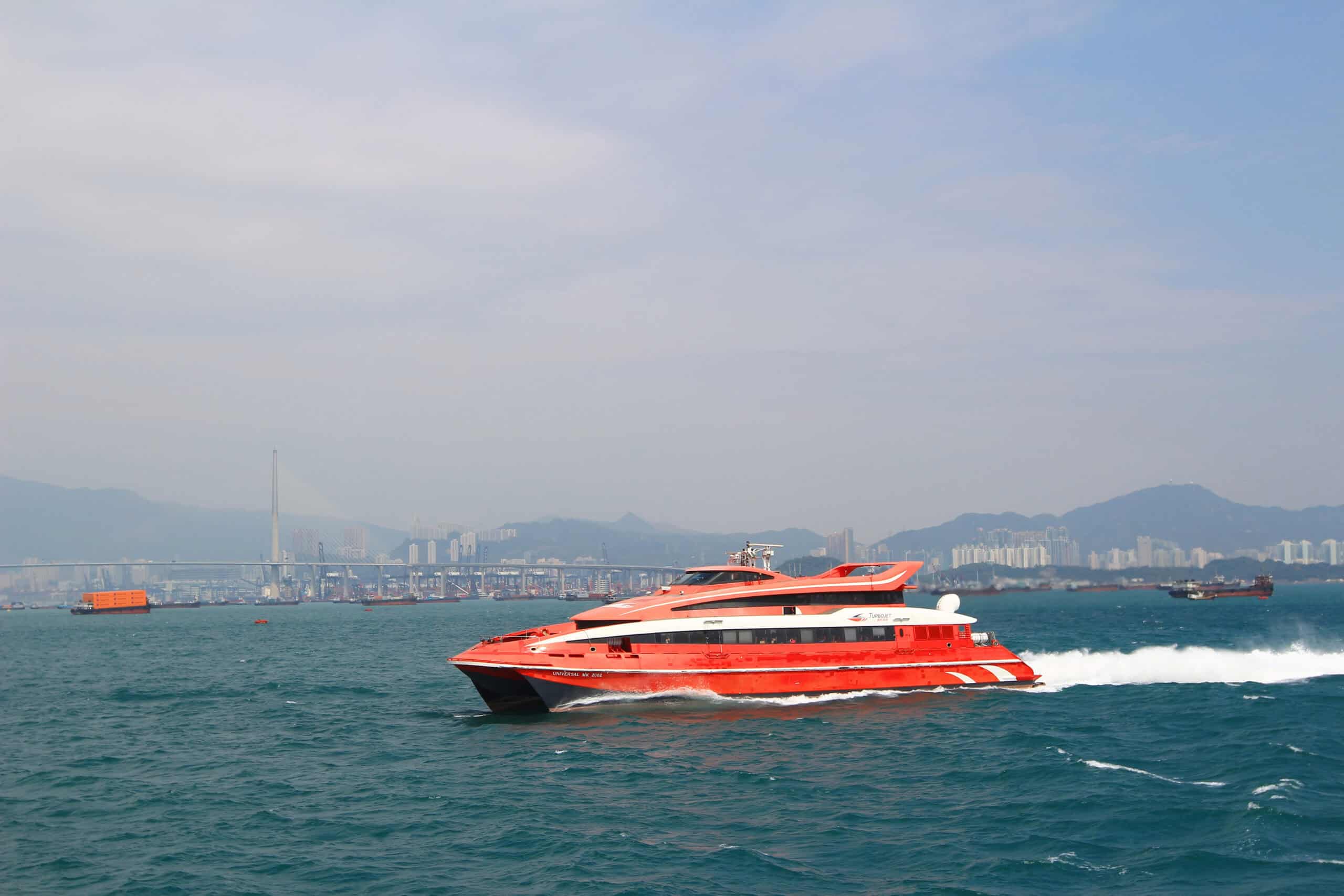
TurboJET runs from the Hong Kong Macau Ferry Terminal at Shun Tak Centre in Sheung Wan to Macau’s Outer Harbour Ferry Terminal. The Outer Harbour terminal is on the Macau Peninsula, the older, historic side of the city. If you’re staying anywhere near Senado Square, the Ruins of St Paul’s, or the heritage centre, this is the more convenient arrival point.
If you’re not sure whether you want to stay on the Peninsula or in Cotai, I break down the differences (and what each area actually feels like) here: Where to Stay in Macau.
Cotai Water Jet departs from the same Sheung Wan terminal but arrives at the Taipa Ferry Terminal on Macau’s southern island. Taipa is where you’ll find the big casino resorts such as the Venetian, Galaxy, Studio City. If your hotel is in that area, Cotai Water Jet saves you a trip across the city.
We chose TurboJET to Outer Harbour because our hotel was about a five-to-ten minute walk from Senado Square. We were checking into our room within 30 minutes of clearing immigration.
How to Book and What It Costs
You can buy tickets in a number of ways for the ferry including:
- At the terminal counter on the day,
- Online through TurboJET’s website,
- Third-party platform like Klook or 12Go.
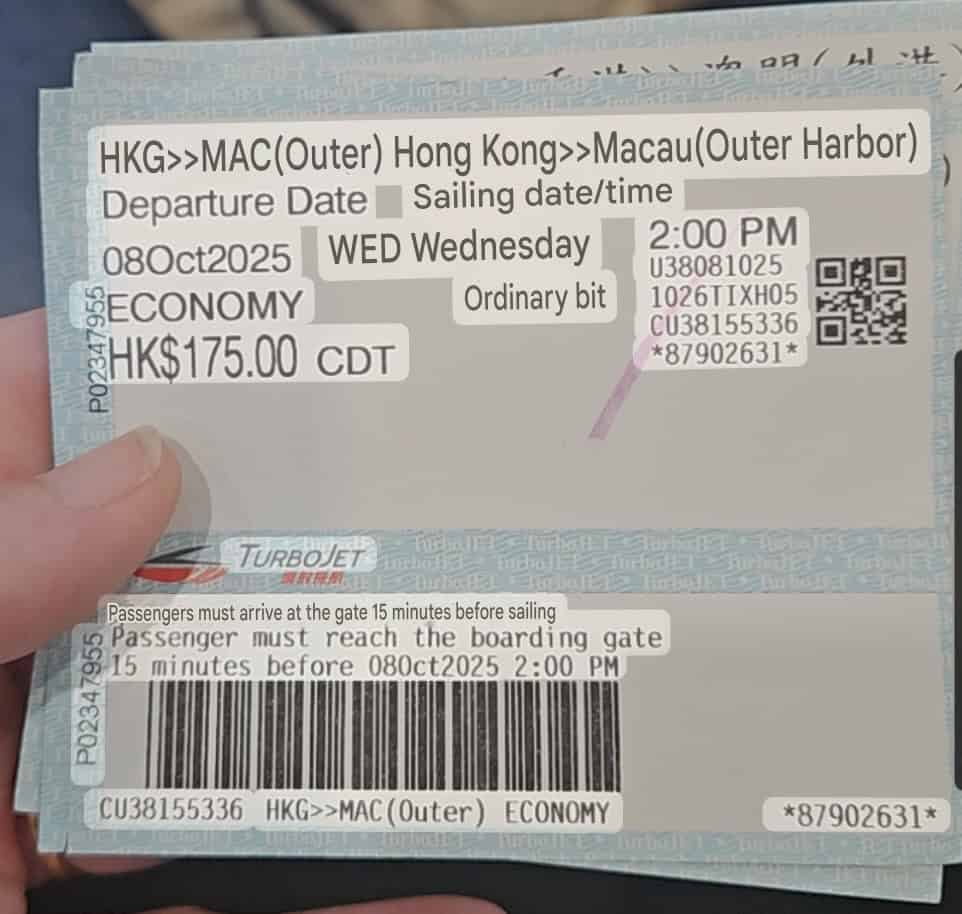
We bought ours at the counter on arrival and it was very easy. Once we found the ticket desk, we lined up for about 5 minutes and got tickets for a suitable time.
If you do need to travel at a specific time, or prefer to skip the ticket counter entirely (it took us a little while), booking through Klook is the most straightforward option. You’ll get a QR code e-ticket sent straight to your phone, no queuing required. You can also compare sailings and book via 12Go, which is handy if you want to see multiple options and times side by side before committing. Same ferry, just a little last minute!
TurboJET has two classes: Economy and Super Class. We went Economy and it was perfectly fine for a 60-minute crossing. Super Class gets you lounge access, priority boarding, a meal on board, and 30kg luggage allowance instead of 20kg. For an hour-long trip, it felt like an unnecessary upgrade.
Economy fares are quoted in Hong Kong dollars and include departure tax.
TurboJET Ferry Prices (including departure tax) as of 2026)
|
Weekday |
HK$175 per adult |
|
Weekends and public holidays |
HK$190 per adult |
|
Night sailings (from 6:30pm) |
HK$220 per adult |
|
Kids under 12 / seniors 65+ |
HK$18 off per ticket |
|
Children aged 1+ |
Need their own ticket |
We travelled on a weekday during a public holiday period, so ours came to HK$190 per adult and HK$172 for our son, HK$552 for the three of us.
Getting to the Macau Ferry Terminal in Hong Kong
The Hong Kong Macau Ferry Terminal is on the third floor of Shun Tak Centre, 200 Connaught Road Central in Sheung Wan.
How to get to the ferry terminal
MTR: Sheung Wan station (follow signs for Shun Tak Centre)
From Central: 1 stop on the Island Line
From Kowloon: change at Central to the Island Line
Taxi: easy drop-off directly outside
It’s connected directly to Sheung Wan MTR station, so getting there from anywhere on the network is straightforward. We came from the Kowloon side. Red line to Central, one stop on the blue line to Sheung Wan.
The biggest issue we hit was that we were checking out of our hotel that morning, so we arrived with all of our luggage: three small suitcases and two backpacks. We’d read that bag storage was available at the terminal, so the plan was to drop everything and spend a couple of hours exploring Hong Kong Island before our sailing.
After a few laps and some directions, we eventually found the luggage storage office at the TurboJET Service Centre on the first floor.
TurboJET Luggage Storage Pricing
Storage is charged per piece – HK$50 for up to five hours, HK$100 for five to eight hours, then HK$20 per hour after that. With five bags and a few hours to spare, it was going to add up pretty fast.
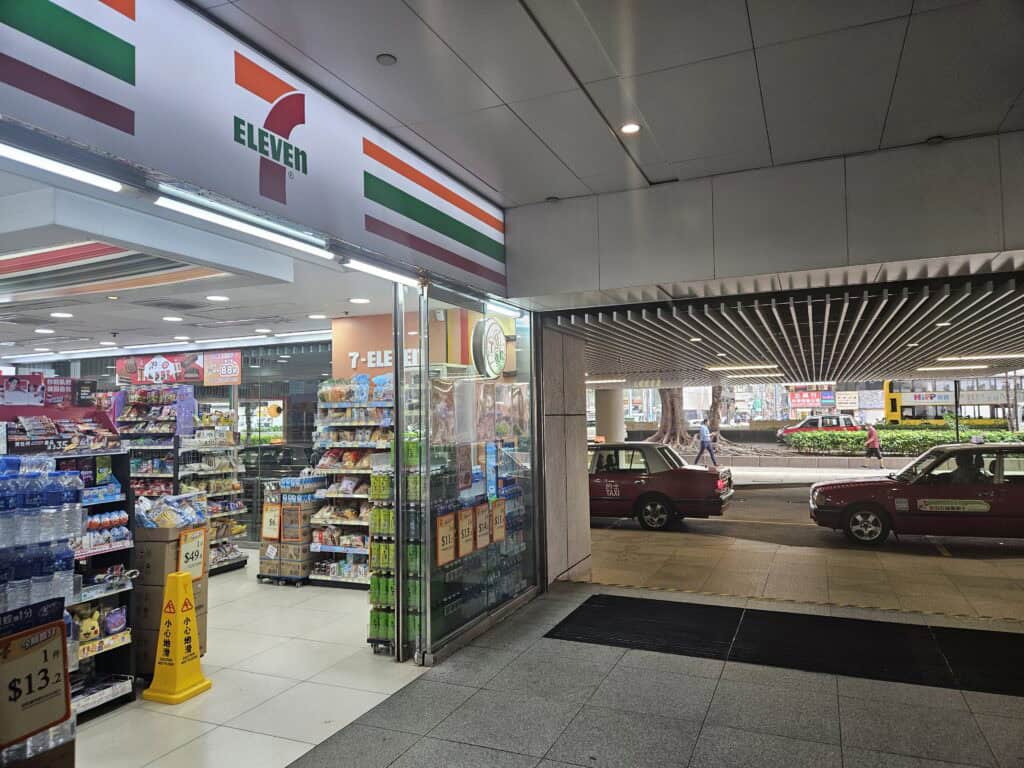
The woman at the counter very kindly pointed us to the 7-Eleven downstairs instead, which has luggage lockers. Significantly cheaper. Multiple bags fit in some of the lockers and genuinely easy to use. If you’re in the same position, check there first.
Luggage Allowance
Each passenger can carry one piece of hand luggage on the ferry for free within the 20kg allowance.
Anything beyond that needs to be checked in at the luggage counter, starting at HK$35 per piece. The check-in desk closes 20 minutes before departure, so if you’re travelling with larger bags, factor in extra time.
Getting to the Macau ferry terminal (what caught us out)
There’s no Grab or Uber operating in Macau, taxis are limited, and during peak hours they’re genuinely difficult to find. If you’re not familiar with how transport works once you arrive, it can catch you out. I’ve broken down exactly how buses, taxis and the Macau Pass work here.
On our return trip, a Friday evening around 5–6pm, our hotel tried and couldn’t get one for us. We tried to flag one down outside, gave up, took a five-minute bus to a busier part of town, and eventually got one from there after a wait. Traffic was bumper-to-bumper.
Fortunately, we hadn’t yet booked tickets. If you’re catching a specific sailing, build in significantly more time than you think you’ll need. The terminal itself isn’t far from central Macau, but getting to it can be.
This applies specifically to the Outer Harbour terminal on the Macau Peninsula. If you’re returning via Cotai Water Jet from the Taipa Ferry Terminal, the casino hotel shuttles run directly there, so getting to the terminal is considerably easier.
The Seat Allocation Trick Nobody Mentions
This is the tip I really wish someone had told us. Once you’ve bought your ticket and cleared Hong Kong immigration, you enter a waiting area before boarding. In that waiting area, there’s a desk. You need to go to that desk to get your seat numbers allocated.
Your seats aren’t printed on your ticket or assigned when you purchase them. You have to actively go up and ask.
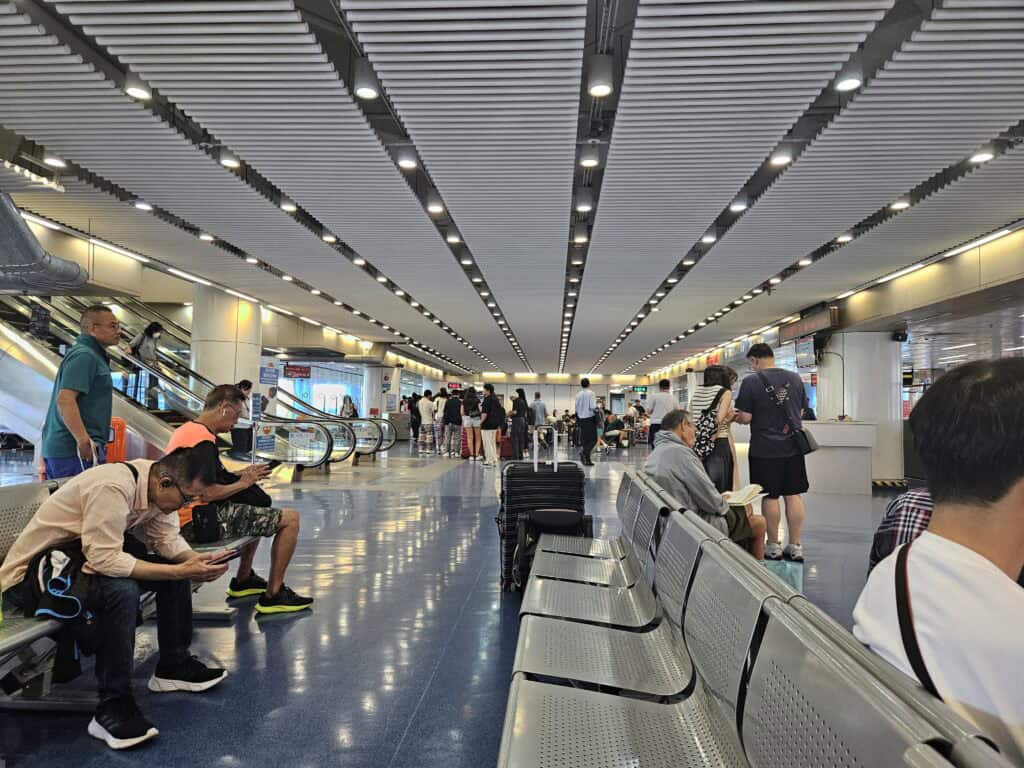
We had no idea. We were there so early, sitting in the waiting area feeling quite pleased with ourselves, when we noticed other passengers walking up to the desk and coming back with seat numbers. I assumed they were asking about boarding times or gates. By the time we figured out what was happening and joined the queue, all the window seats were gone.
I must admit to feeling a little annoyed as a good chunk of the people with window seats were clearly regular commuters who spent the entire crossing on their phones. We were the ones who actually wanted to see the view, stuck craning our necks from the middle of the row in a fairly futile attempt to catch a glimpse.
Get to the terminal early, clear immigration, and the moment you’re in the waiting area, go straight to the desk. That’s how you get a window seat.
For the planners amongst us, if you do book online through TurboJET’s website more than 24 hours in advance you can select your seats during the booking process.
What the Hong Kong to Macau Ferry Is Like
The trip took about 60 minutes. The ferry is comfortable and air-conditioned (which, after days of humidity, was welcomed), with rows of standard seating in a 2–5–2 layout. The seats were quite spacious with reasonable leg room and were quite comfortable for the journey.
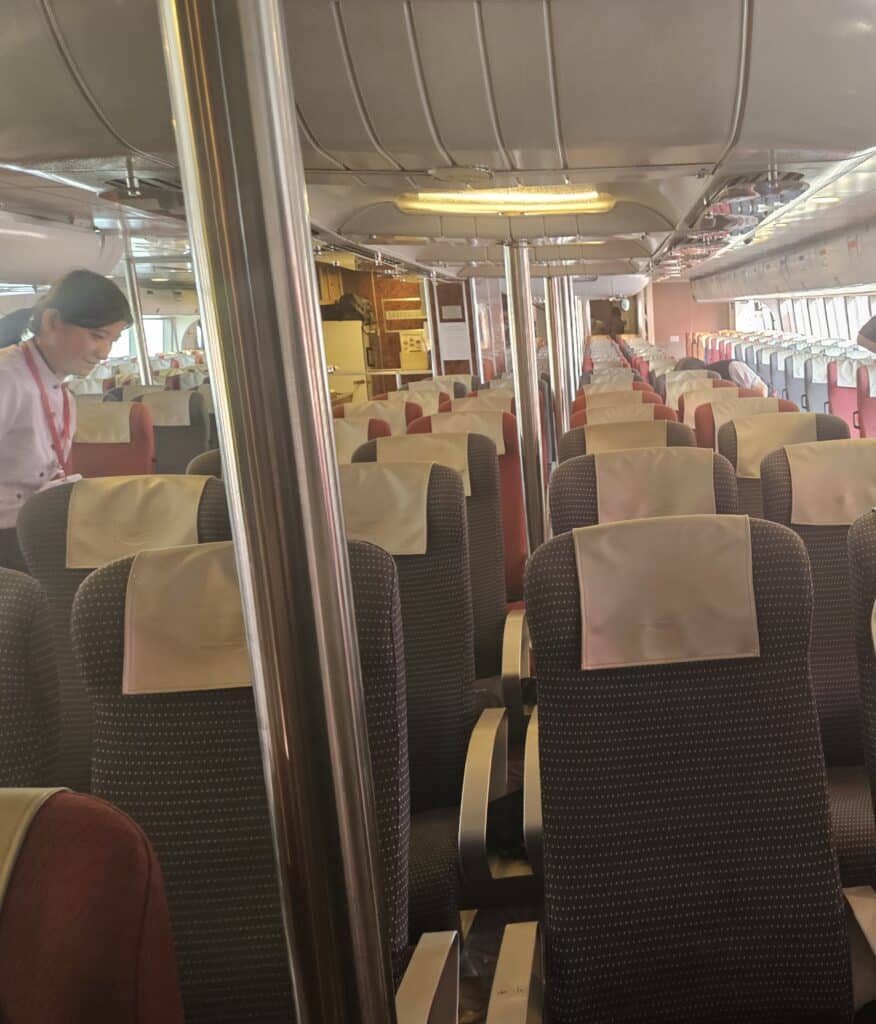
Once on board, staff will direct you to place your larger bags at the front of the ferry, where they’re gathered together and secured with a rope for safety. Smaller bags can stay with you at your seat. The language barrier meant I had no idea what they were trying to tell me at first, so this is a little heads up on where they’re directing you.
It was an interestingly subdued ride. There’s a small section of snacks, drinks and duty-free on board though most people didn’t seem to use it. I had expected to be able to get up, have a wander and look out the windows but no-one else really did, so I stayed put too.
We didn’t have Wi-Fi on our trip, though their website suggests that it may now be available. It might be a newer addition, or something we didn’t realise at the time.
We were using an Airalo regional eSIM and the signal dropped out for about 40 minutes mid-crossing, returning as we approached Macau. If you’re planning on using your phone on the ride, I would download what you need in advance.
Also note that if you’re using a Hong Kong–only eSIM, it won’t work as you approach Macau. You’ll need a regional or Macau-compatible option.
If you haven’t sorted a SIM before you arrive, a regional Asia eSIM from Airalo covers both Hong Kong and Macau. You can activate it before you leave home and not think about it again.
Hong Kong and Macau Immigration: What to Expect
Hong Kong and Macau are separate Special Administrative Regions with their own immigration controls, so even though you’re not leaving China, you go through passport checks at both ends.
- On the Hong Kong side, you clear exit immigration at Shun Tak Centre before boarding. This is part of why TurboJET recommends arriving at least 30 minutes before departure. You’re going through immigration and getting your seat allocation before the ferry leaves. We were the only ones in line when we went through, but it can get busy depending on timing with the average around 15-30 minutes.
- At the Macau end, you clear entry immigration after getting off the ferry. For us this took about 10 minutes. As Australian passport holders we didn’t need a visa for a short stay, and there were no arrival forms to fill out. They just scanned our passports and sent us through. You can check here to see if you require a visa.
It was all quite simple. We expected this to be more complicated than it was. The signage was clear and queues moved quickly. Just keep your passport in your hand luggage as you’ll need it multiple times within the short travel window.
Taking the Bridge Bus: Hong Kong to Macau via the HZMB
The Hong Kong–Zhuhai–Macau Bridge opened in 2018, and there are now two main bus options that cross it.
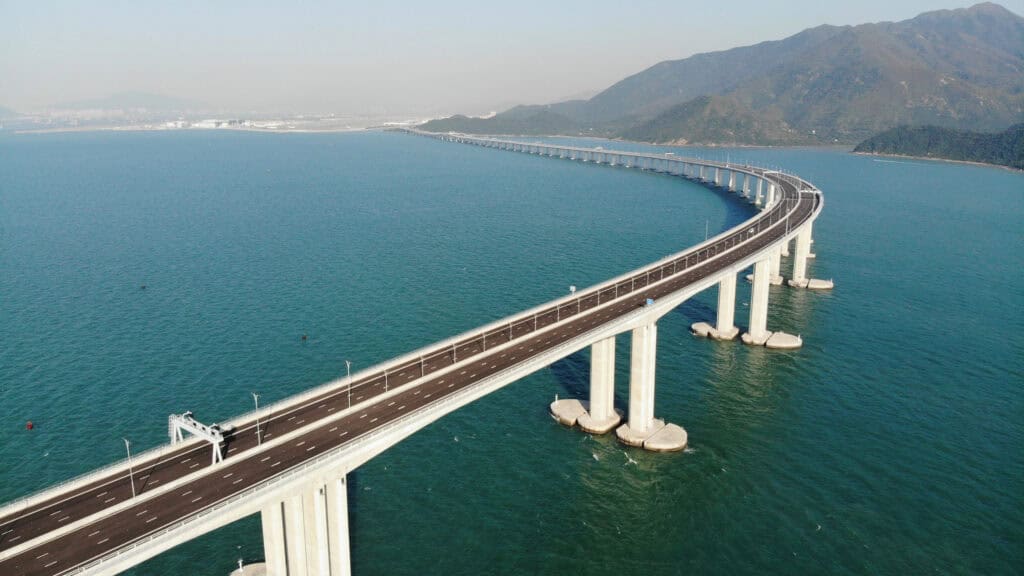
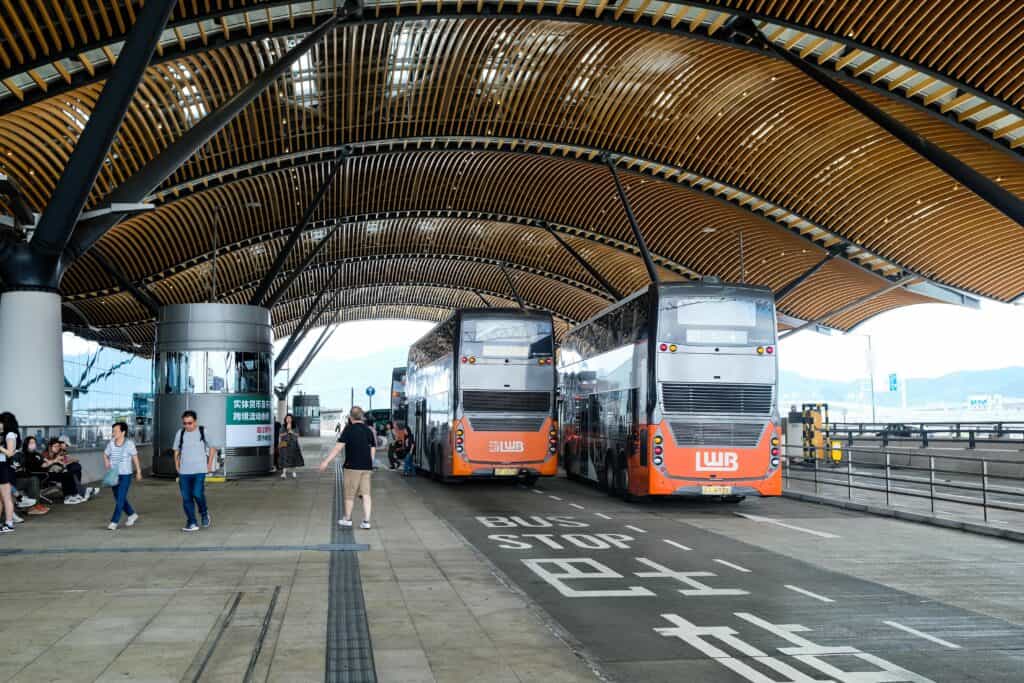
The Golden Bus (HZMB shuttle) runs 24 hours a day, every 5–15 minutes, for around HK$65 during the day or HK$70 at night. It’s the cheapest way across by a significant margin.
You can check current schedules and book the HZMB shuttle via 12Go which is a lot easier than wrestling with the official HZM Bus site, which, as I mention below, was genuinely painful to use.
The catch is that it only runs between the two HZMB port buildings. The Hong Kong port sits on an artificial island near the airport rather than in the city centre, and the Macau port is similarly on the outskirts, so you need to sort your own transport at both ends.
Getting to the HZMB Ports
Getting to the Hong Kong port from the city isn’t particularly intuitive. There are only a few direct feeder buses, the B4 from the airport, B5 from Tung Chung, and B6 from Sunny Bay station, so if you’re coming from central Hong Kong or Kowloon, you’ll first need to take the MTR or a local bus to one of those points before connecting on.
From Tsim Sha Tsui:
~1 hour by MTR
~30 minutes by taxi
At the Macau end, things are a bit easier. Most major casino hotels run free shuttle buses (for example, City of Dreams runs regular services) from the HZMB Macau Port to the Cotai Strip and Outer Harbour ferry piers, and from those piers you can pick up further free hotel shuttles around the city. You don’t need to be a guest. It’s not exactly door-to-door, but it does make getting into the city manageable without spending anything extra.
This is a good option if you’re travelling on a budget and don’t mind a bit of extra logistics — but for most people, the ferry is just easier.
Direct Coach Option
The direct cross-border coaches (companies like One Bus or Eternal East) are a more structured option if you’re coming from urban Hong Kong. They pick up from locations like Jordan, Tsim Sha Tsui, and Prince Edward and drop off directly at major Macau hotels such as the Venetian, Londoner, and Sands, so you avoid needing to figure out transfers at either end.
The trade-off is cost (roughly HK$160–180 per ticket), less frequent departures, and the need to book in advance. You’ll still go through immigration at the border, but the process is guided and you continue on the same bus afterwards. It’s significantly easier than the Golden Bus, but not as simple or flexible as the ferry.
This makes the most sense if you want something simple and don’t mind paying a bit more for it.
Here’s why we skipped the Bridge Bus
We’d seriously considered the Golden Bus for our return trip. The plan was to take the ferry one way and the bridge the other to experience both options. I’d mapped out what I believed was a workable route from the HZMB Macau Port to the Hong Kong port near the airport, and from there to our airport hotel, without crossing into Hong Kong proper.
Then, mid-taxi-hunt in Macau, my husband decided he was certain my research was wrong and that we’d end up through immigration at the airport and be stuck airside. After some tense negotiations, and with me now doubting myself, we scrapped the plan and took the ferry instead.
(Spoiler: the bus would have been completely fine. It would have dropped us near our airport hotel and saved us an extra transport decision in Hong Kong. My research was correct. I’m fine.)
The other sticking point was the booking process. The HZM Bus website is genuinely frustrating. You need to create a login just to see pricing, and even that wasn’t straightforward. It took multiple attempts to get an account set up to the point where I could access basic route and fare information. The site kept defaulting to a mobile version on my laptop, and some of the buttons simply didn’t work.
It’s a shame, because the Golden Bus is a good-value option. The booking experience just doesn’t make it easy to commit to with any confidence.
This kind of last-minute decision-making is exactly why I try to map trips out in advance… though clearly not always successfully. If you want to be more organised than we were, our step-by-step Asia itinerary planning guide walks through how to avoid these mid-trip pivots.
Private Transfer from Hong Kong to Macau
You can’t take a regular taxi between Hong Kong and Macau. Drivers need special cross-border licensing. Private transfers are available through platforms like Klook where you can see current pricing and compare options before booking, which is handy given the cost.
Cost: ~HK$3,200 one-way
Best for: groups, lots of luggage, door-to-door convenience
Downside: very expensive for what it is
We will splurge for convenience but this was a little too much splurge. That said, it can make sense in some situations.
When it might be worth it:
– A larger group splitting the fare
– Mobility needs
– Travelling with bulky luggage
– Needing true door to door service
For everyone else, the ferry or bridge bus will get you there for significantly less.
Quick Tips for the Hong Kong to Macau Ferry
A few things that would have made our crossing smoother:
- Arrive at least 30 minutes early
TurboJET’s own recommendation. You’ll use most of that going through immigration without even realising it. - Go straight to the seat allocation desk after immigration
Seats aren’t assigned when you buy your ticket; you have to actively go and ask. Window seats go to whoever asks first, or to people who booked online more than 24 hours in advance and selected their seats during booking. - Check the 7-eleven storage lockers before paying for terminal luggage storage
If you’re travelling with multiple bags, the lockers are significantly cheaper and easy to use. - TurboJET goes to the Macau Peninsula; Cotai Water Jet goes to Taipa.
Choose based on where you’re staying. - Download anything you need before you board.
eSIM signal drops mid-crossing. Ours cut out for around 40 minutes. If you’re on a Hong Kong-only eSIM, it also won’t work as you approach Macau, so make sure you have a regional or Macau-compatible plan. We used an Airalo Asia Region eSIM. - Economy class is perfectly fine.
It’s only a 60-minute crossing. Super Class gets you lounge access, a meal, and extra luggage allowance, none of which you need for an hour on the water. - Allow extra time getting to the Macau terminal on your way back, especially during peak hours.
Door-to-door on our return, from leaving our Macau hotel to arriving at the Hong Kong airport hotel, took around three to three-and-a-half hours, including the taxi wait, dinner at the terminal, the crossing, and a taxi at the other end.
Which Option Is Right for You?
For our family, travelling mid-trip, in the heat, with luggage and a tired kid, the ferry was the clear winner. TurboJET from Sheung Wan to Outer Harbour was straightforward in both directions, and we didn’t have to think too hard about logistics on a day when we didn’t have the energy for it.
The bridge bus is genuinely cheaper and worth considering if you’re near the airport or keeping your costs down. The private transfer makes sense if you’re splitting costs with a group or need the convenience.
But for most first-time visitors staying in central Hong Kong or Kowloon, the ferry is the simplest option. If I could go back and tell myself two things before we boarded, it would be this: go to the seat allocation desk the moment you’re in the waiting area, and check the 7-Eleven lockers before paying for terminal luggage storage.
Once you’ve sorted the crossing, the next question is usually how long to stay. If you’re still deciding whether to day trip or stay overnight in Macau, that post covers exactly what fits into each option and why we’d always recommend the night.
Planning the rest of your Hong Kong & Macau trip?
Still mapping out your itinerary? These might help:
- How to get to Victoria Peak (and whether it’s worth it)
- Where to stay in Hong Kong for first-time visitors
- Our full Hong Kong, Macau & Hanoi itinerary
- How to plan a multi-city Asia trip
- Where to stay in Macau: why we skipped the casino hotels
If you’re still deciding what to do in Macau, GetYourGuide has a solid range of tours and activities — the heritage walks around the Ruins of St Paul’s area are worth a look. Once you arrive, getting around is easier than it first seems, especially if you rely on buses rather than taxis.